
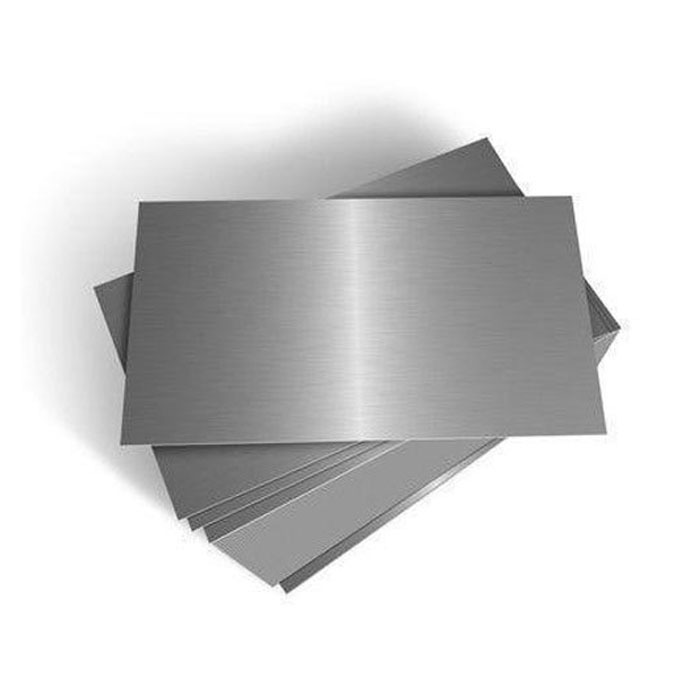
•Definition: 75Cr1 is a modified alloy steel with added Chromium (Cr), possessing high toughness and excellent wear resistance.
•Basic Characteristic: Provides dimensional stability and high impact resistance during heat treatment due to its alloy content.
•Tensile Strength: 700 – 850 MPa (in soft annealed condition). Hardness (Delivery): Usually around 210 – 245 HB (Brinell).
•Hardness: Can reach up to 54 – 58 HRC after heat treatment.
•Maximum Size: 2500mm x 1000mm.
•Thickness Range: Between 1mm and 5mm.
•Woodworking Tools: Large diameter circular saws and band saw blades.
•Cutting Elements: Industrial knives, paper cutting knives, and planer blades. •Automotive and Machinery: Clutch disks, spring washers, and high strength rings.
•Hand Tools: Quality chisels, side chisels, and heavy-duty spatulas.
Temperature values that can be used to provide technical depth:
•Forging: 800°C – 1050°C.
•Soft Annealing: 680°C – 720°C.
•Hardening (Quenching): 800°C – 840°C (Usually in oil).
•Tempering: Depending on the purpose of use and desired hardness between 350°C – 550°C
The element ratios determining the high performance and hardening capability of 75Cr1 steel are as follows:
Element Ratio (%)
Carbon (C) 0.95 – 1.05
Manganese (Mn) 0.30 – 0.60
Silicon (Si) 0.15 – 0.35
Phosphorus (P) ≤ 0.025
Sulfur (S) ≤ 0.025
• Provides very high hardness and wear resistance.
• Has excellent cutting edge retention (sharpness) property.
• Ideal for precision tolerance applications.
• Due to the very high carbon content, welding is not recommended.
• Low corrosion resistance; must be oiled or coated to prevent rusting.
• More brittle than C55S; must be carefully processed against impacts.
•Definition: C55S is a high carbon content spring steel compliant with EN 10132-4 standard.
•Basic Characteristic: Offers high wear resistance and a good balance of ductility.
•Heat Treatment: Can be used in both normalized and quenched (tempered) conditions.
•Tensile Strength: 650 – 800 MPa (in soft annealed condition).
•Yield Point: Varies depending on the applied heat treatment.
•Hardness: Generally around 200-230 HB (Brinell) depending on delivery condition, can go up to 50 - 58 \{ HRC} (depending on thickness).
•Size 2500mm x 1000mm maximum
•Thickness between 1mm and 5mm
•Springs, connecting parts. Precision washers, rings, and retaining clips.
•Saw blades, chisels, and side chisels. Garden shears, saw blades, and spatulas.
•Gears, shafts, and wear-resistant plates. Parts for brake systems, clutch springs, and seat belt mechanisms.
•Plow tips and rakes. Thin and durable metal parts such as needles and platens.
•Mentioning these temperature values in presentation adds technical depth:
•Forging: 850°C – 1050°C
•Soft Annealing: 680°C – 710°C
•Hardening (Quenching): 810°C – 840°C (In oil or water)
•Tempering: Depending on usage purpose 400°C – 600°C
The element ratios determining the high performance and hardening capability of C55S (1.1204) steel are as follows:
Element Ratio (%)
Carbon (C) 0.52 – 0.60
Manganese (Mn) 0.60 – 0.90
Silicon (Si) 0.15 – 0.35
Phosphorus (P) ≤ 0.025
Sulfur (S) ≤ 0.025
•Excellent wear resistance.
•Responds well to heat treatment.
•High cost-performance balance.
•Due to high carbon, the weldability is low (Preheating is required).
•Low corrosion resistance (Coating may be required)
Definition: 95Cr1 is a high carbon and low chromium alloy cold work tool steel. Compared to standard carbon steels, it offers better hardenability and wear resistance.
Basic Characteristic: Thanks to the chromium content, it responds more stably to heat treatment and has very high cutting edge durability. It has an excellent balance of toughness and hardness.
•Mechanical data that distinguish 95Cr1 from others:
•Tensile Strength: 700 – 900 MPa (in soft annealed condition).
•Yield Point: Varies depending on the alloy content.
•Hardness: Generally around 210-235 HB, can reach up to 58 - 63 HRC after quenching and tempering (depending on section thickness).
•Size 2500mm x 1000mm maximum
•Thickness between 1mm and 5mm
•Cutting and Drilling Tools: Metal cutting saws, circular saws, and high-performance hand tools.
•Precision Parts: Bearing housings (some types), wear plates, and precision measuring instruments.
•Hand Tools: Quality chisels, woodworking knives, and scissors that require high hardness.
•Industrial Knives: Paper and leather cutting knives, special cutters for the textile industry.
Temperature values that can be used to provide technical depth:
•Forging: 850°C – 1050°C. Soft
•Annealing: 710°C – 750°C.
•Hardening (Quenching): 800°C – 830°C (Definitely must be quenched in oil).
•Tempering: Depending on the usage purpose between 150°C – 400°C.
The element ratios determining the high performance and hardening capability of 95Cr1 steel are as follows:
Element Ratio (%)
Carbon (C) 0.90 – 1.05
Chromium (Cr) 1.35 – 1.65
Manganese (Mn) 0.30 – 0.60
Silicon (Si) 0.15 – 0.35
Phosphorus (P) ≤ 0.025
Sulfur (S) ≤ 0.025
•Can harden more deeply due to chromium alloy.
•Maintains sharpness of cutting edges for a long time.
•Dimensional stability is high after heat treatment.
•Welding is not recommended due to alloy and carbon content; requires very specific procedures in mandatory cases.
•Corrosion: Resistance is limited against rust; protective measures should be taken in humid environments.
•Brittleness: It can be brittle against impacts due to high hardness if tempering is done incorrectly.
Definition: 80CrV2 is a cold work tool steel, alloyed with chromium and vanadium, having high carbon content and high impact resistance.
It is commonly known in the industry as "L2" steel.
Basic Characteristic: Has a very fine-grained structure due to the addition of vanadium.
This feature gives the steel both very high hardness and, surprisingly, toughness (impact resistance) even at this hardness.
Cutting edge retention capability is excellent.
•Tensile Strength: 750 – 950 MPa (in soft annealed condition).
•Yield Point: Shows very high resistance to permanent deformation under high loads.
•Hardness: Generally around 215-240 HB in delivery condition; with proper heat treatment, it reaches values of 58 - 62 HRC.
•Size: 2500mm x 1000mm maximum.
•Thickness: Between 1mm and 10mm (available in a wide range).
Where is 80CrV2 used?
•Saw Blades: Large diameter circular saws, band saws and stone/metal cutting equipment.
•Knifemaking: Due to its durability and edge retention, professional kitchen knives, hunting knives, and bushcraft knives.
•Hand Tools: Quality axes, chisels, punches, and woodworking tools.
•Industrial Cutters: Shredding knives used in the paper, cardboard, and plastic recycling sector.
To maintain the fine grain structure, the specified temperatures must be adhered to:
•Forging: 850°C – 1050°C.
•Soft Annealing: 710°C – 750°C.
•Hardening (Quenching): 820°C – 860°C (Must be quenched in oil).
•Tempering: Depending on the purpose of use between 180°C – 450°C (For knives, generally 200°C - 250°C).
The element ratios determining the high performance and hardening capability of 80CrV2 steel are as follows:
Element Ratio (%)
Carbon (C) 0.75 – 0.85
Chromium (Cr) 0.40 – 0.70
Vanadium (V) 0.15 – 0.25
Manganese (Mn) 0.30 – 0.50
Silicon (Si) 0.15 – 0.35
Phosphorus (P) ≤ 0.025
Sulfur (S) ≤ 0.025
•Excellent balance of toughness and wear resistance due to vanadium.
•Cutting edge retention is much higher than plain carbon steels.
•Response to heat treatment is stable and sharpening is relatively easy.
•Welding: Not recommended due to alloy and carbon content; requires very special procedures in mandatory cases.
•Corrosion: Resistance is limited against rust; protective measures should be taken in humid environments.
•Brittleness: Can be brittle against impacts due to high hardness if tempering is done incorrectly.
Definition: 68CrNiMo33 is a cold work tool steel alloyed with nickel (Ni), chromium (Cr), and molybdenum (Mo), having very high toughness and the ability to harden deeply.
Basic Characteristic: Thanks to its high nickel ratio, it offers excellent impact resistance even at high hardness values. Especially in thick section parts, it provides a homogeneous hardness distribution down to the core of the material.
•Tensile Strength: 750 – 950 MPa (in soft annealed condition).
•Yield Point: Very resistant to cracking even under heavy impacts due to its alloy structure.
•Hardness: Generally around 220-250 HB; after heat treatment, it reaches 54 - 58 HRC values depending on the purpose of use.
•Size: 2500mm x 1000mm maximum.
•Thickness: 1mm to 10mm and above (commonly preferred in thick plate and block forms).
•Forging and Cutting Molds: Large cold forging molds, steel cutting blades, and heavy-duty punches.
•Knifemaking: Particularly suitable for axes, swords, and heavy-duty outdoor knives that will be exposed to very high impact.
•Plastic and Rubber Molds: Molds requiring high strength and wear resistance.
•Engineering Parts: High tensile shafts, heavy-duty connectors, and gear bodies.
Due to its nickel alloyed structure, controlled cooling is important:
•Forging: 850°C – 1050°C.
•Soft Annealing: 710°C – 750°C.
•Hardening (Quenching): 840°C – 870°C (Quenching in oil or air cooling for large parts).
•Tempering: Depending on the purpose of use between 180°C – 500°C (Generally high tempering is applied for maximum toughness).
The element ratios determining the high performance and hardening capability of 68CrNiMo33 steel are as follows:
Element Ratio (%)
Carbon (C) 0.63 – 0.73
Nickel (Ni) 1.10 – 1.40
Chromium (Cr) 1.10 – 1.40
Molybdenum (Mo) 0.15 – 0.25
Manganese (Mn) 0.40 – 0.60
Silicon (Si) 0.15 – 0.35
•Extraordinary resistance to impact (toughness) due to its nickel content.
•Performance in hardening is excellent even in thick sections.
•Dimensional changes after heat treatment are minimal.
•Welding: Due to its alloy structure, welding capability is weak, and there is a high risk of cracking.
•Cost: More expensive than other carbon steels due to nickel and molybdenum content.
•Machinability: Even in annealed condition, it is somewhat harder to machine compared to standard steels.
•Definition: C100S is a spring steel with a very high carbon content compliant with EN 10132-4 standard.
•Basic Characteristic: Offers maximum hardness potential, superior wear resistance, and high fatigue strength.
•Tensile Strength: 710 – 860 MPa (in soft annealed condition).
•Yield Point: Varies depending on heat treatment and tempering hardness.
•Hardness: Generally around 210-245 HB (Brinell) in delivery condition.
•Maximum Hardness: Can reach up to 57 - 62 HRC after heat treatment.
•Maximum Size: 2500mm x 1000mm.
•Thickness Range: Between 1mm and 5mm.
•High Tension Springs: Valve springs and high precision technical springs.
•Cutting Tools: Razor blades, scalpels, fine saws, and precision spatulas.
•Measuring Instruments: Feeler gauges, caliper parts, and high carbon tape measures.
•Industrial Parts: Needles and platens for textile machines, valve plates requiring high wear resistance.
Temperature values that can be used to provide technical depth:
•Forging: 800°C – 1050°C.
•Soft Annealing: 680°C – 720°C.
•Hardening (Quenching): 780°C – 810°C (Usually in oil).
•Tempering: Depending on the purpose of use and desired hardness between 200°C – 500°C
The element ratios determining the high performance and hardening capability of C100S steel are as follows:
Element Ratio (%)
Carbon (C) 0.95 – 1.05
Manganese (Mn) 0.30 – 0.60
Silicon (Si) 0.15 – 0.35
Phosphorus (P) ≤ 0.025
Sulfur (S) ≤ 0.025
• Provides very high hardness and wear resistance.
• Has excellent cutting edge retention (sharpness) property.
• Ideal for precision tolerance applications.
• Due to the very high carbon content, welding is not recommended.
• Low corrosion resistance; must be oiled or coated to prevent rusting.
• More brittle than C55S, must be carefully processed against impacts.
Definition: 75Ni8 is a high-carbon and nickel-alloyed cold work steel. It is preferred in the industry, especially in precision cutting tools that require high toughness and in the production of decorative laminated steel.
The nickel content of around 2% provides the material with excellent ductility and impact resistance.
It is known for the bright surface quality and high polishability it achieves after heat treatment.
It is also one of the most commonly used steels as a "bright layer" in the production of Damascus steel for contrast.
•Tensile Strength: 700 – 850 MPa (in soft annealed condition).
•Yield Point: The ability to stretch under load is very high thanks to the nickel alloy; it is resistant to sudden fractures.
•Hardness: Generally around 210-230 HB; can go up to 56 - 60 HRC after quenching. •Size: 2500mm x 1000mm maximum.
•Thickness: Between 0.50mm and 5mm (Usually used in thin strip and sheet form).
Where is 75Ni8 used?
•Woodworking: Band saws, wide circular saws, and wood cutting blades.
•Precision Tools: Paper cutting knives, cardboard industry knives, and punches that require high toughness.
•Knifemaking and Art: Used to create bright gray/silver color layers in Damascus steel production.
Due to its nickel-alloyed structure, controlled cooling is important: These temperatures should be followed to preserve the advantages provided by nickel:
•Forging: 850°C – 1050°C.
•Soft Annealing: 700°C – 740°C.
•Hardening (Quenching): 800°C – 830°C (Quenching in oil is recommended).
•Tempering: Depending on the purpose of use between 180°C – 400°C.
The element ratios determining the high performance and hardening capability of 75Ni8 steel are as follows:
Element Ratio (%)
Carbon (C) 0.72 – 0.78
Nickel (Ni) 1.80 – 2.10
Manganese (Mn) 0.30 – 0.50
Silicon (Si) 0.15 – 0.35
Chromium (Cr) ≤ 0.15
Phosphorus (P) ≤ 0.025
Sulfur (S) ≤ 0.025
•Very high toughness: More resistant to impacts compared to other carbon steels.
•Excellent aesthetic appearance: Provides a bright surface after heat treatment and polishing.
•High ability to harden deeply.
•Cost: More costly compared to standard spring steels (like C55S) due to nickel content.
•Corrosion: Although it's a nickel alloy, it is high in carbon and requires protection against rust.
•Heat Treatment: Nickel can cause residual austenite formation in improper heat treatment, so temperature control is critical.
Definition: 102Cr6 is a cold work tool steel with a high carbon and chromium content, which has an extraordinarily high wear resistance.
Globally, it is commonly known as "bearing steel" (similar to AISI 52100).
Basic Characteristic: Thanks to its high chromium content, it offers excellent hardenability and wear resistance. Its homogeneous structure helps maintain the material's shape under high pressure.
The cutting edge life is very long.
•Tensile Strength: 750 – 950 MPa (in soft annealed condition).
•Yield Point: Resistant to crushing under heavy loads due to its high compressive strength.
•Hardness: Generally around 210-240 HB in delivery condition; after quenching and tempering, it can be raised to values of 60 - 64 HRC.
•Size: 2500mm x 1000mm maximum.
•Thickness: Between 1mm and 8 mm (Common in plate and strip forms).
•Bearings and Motion Systems: Ball bearings, rollers, needle bearings, and linear rail systems.
•Precision Tools: Master gauges, caliper jaws, guides, and guide pull heads.
•Knifemaking: Professional kitchen knives and razors, which expect very high hardness and edge life.
•Manufacturing: Paper and cardboard cutting knives, cold forming rolls and plates.
Due to its high carbon and chromium structure, slow heating during heat treatment is recommended:
•Forging: 850°C – 1050°C.
•Soft Annealing: 710°C – 750°C.
•Hardening (Quenching): 810°C – 850°C (Quenching in oil is preferred).
•Tempering: Depending on the purpose of use between 150°C – 400°C (Generally around 180°C for bearing hardness).
The element ratios determining the high performance and hardening capability of 102Cr6 steel are as follows:
Element Ratio (%)
Carbon (C) 0.90 – 1.05
Chromium (Cr) 1.35 – 1.60
Manganese (Mn) 0.25 – 0.45
Silicon (Si) 0.15 – 0.35
Phosphorus (P) ≤ 0.025
Sulfur (S) ≤ 0.025
•Maximum surface hardness and excellent wear resistance.
•Very high compressive strength (does not deform under load).
•Provides very high brightness and smoothness when polished.
•Welding: Not suitable for welding due to high carbon and chromium; risk of cracking is very high.
•Corrosion: Sensitive to rust; should be kept in a continuously oily environment in bearing applications.
•Brittleness: Can be brittle against impacts at very high hardness; for tasks requiring ductility, 51CrV4 or 80CrV2 are more suitable.
Definition: 51CrV4 is a spring steel alloyed with chromium and vanadium, possessing high fatigue resistance and excellent toughness properties.
It is specifically designed for parts that operate under heavy loads.
Basic Characteristic: Thanks to the addition of vanadium, the grain structure is very fine, which gives it higher impact resistance and ductility compared to other spring steels.
Mechanical data that make 51CrV4 high-performing:
•Tensile Strength: 700 – 900 MPa (in the soft annealed state); after heat treatment, it can reach values of 1200 – 1450 MPa.
•Yield Point: Offers very high elastic limit and is resistant to deformation under heavy loads.
•Hardness: Generally around 225-250 HB in delivered condition; after quenching and tempering, it can be adjusted to 52 - 58 HRC values depending on the intended use.
•Dimensions: Maximum 2500mm x 1000mm.
•Thickness: Between 1mm and 8mm (can also be produced in thicker plate and bar forms).
•Heavy Duty Springs: Automotive suspension springs, leaf springs (leaf stacks), and high-tension coil springs.
•Automotive Parts: Crankshafts, steering knuckles, axle shafts, and high-strength gears.
•Hand Tools: High-quality tool sets, socket bits, and heavy-duty pliers.
•Machine Manufacturing: Impact-working parts, cutter blade bodies, and high-tension fasteners.
Requires precise temperature control due to its alloy structure:
•Forging: 850°C – 1050°C.
•Soft Annealing: 680°C – 720°C.
•Quenching: 820°C – 860°C (must definitely be quenched in oil).
•Tempering: Depending on the desired hardness, between 400°C – 600°C (500°C+ is recommended for high toughness).
The element ratios determining the high performance and hardening capability of 51CrV4 steel are as follows:
Element Ratio (%)
Carbon (C) 0.47 – 0.55
Chromium (Cr) 0.90 – 1.20
Vanadium (V) 0.10 – 0.25
Manganese (Mn) 0.70 – 1.10
Silicon (Si) ≤ 0.40
Phosphorus (P) ≤ 0.025
•Excellent grain structure and toughness due to vanadium.
•One of the most resistant steels to dynamic loads (continuous movement and impact).
•Lower risk of cracking during heat treatment compared to plain carbon steels.
•Welding: Due to its alloyed structure, welding capability is limited; preheating and post-heat treatment must be done.
•Cost: More expensive than carbon steels (such as C55S) due to alloying elements.
•Machinability: Difficult due to high strength in machining operations.